Mount Saint Mary’s University’s Doctor of Physical Therapy degree welcomes an engaged and inclusive student body of future physical therapists with exceptional clinical skills and a deep-rooted dedication to personal growth, social responsibility and compassionate care for all.

The DPT program is led by qualified professionals who are advanced specialists in their fields, combining theoretical foundations with evidence-based practice emphasizing critical thinking and professional behavior. DPT students at the Mount are empowered to create change — in their lives, professions and the world.

What is a DPT degree?

The Doctor of Physical Therapy (DPT) is a professional doctorate for individuals who want to work as physical therapists, and it’s the first step in a life-changing journey toward helping others heal.

The DPT program at MSMU is designed to empower you with the knowledge and skills you need to excel in the evolving field of physical therapy. We prepare our students to thrive in their careers and lead purposefully as they serve their communities. Through hands-on learning and immersive experiences, you’ll gain the expertise to improve patients’ lives through physical rehabilitation and care.

Our mission is rooted in lifting each other up, breaking barriers and pioneering change. As a DPT student at the Mount, you'll join a supportive community that values leadership and encourages everyone to reach their full potential.

View the program overview

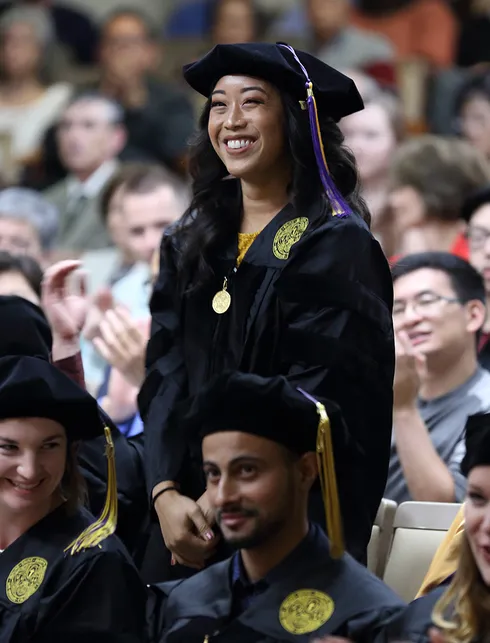
DPT student smiling at graduation

Program Outcomes

At the Mount, we strive to make our graduates Unstoppable by providing them with innovative teaching, research, and quality clinical care through creativity, critical thinking, adaptability, and inclusive excellence.
89.55% Average Graduation Rate

Two-year average graduation rate – CAPTE data (Class of 2023, 2024)

89.09% First-Time Pass Rate

Two-year average first-time pass rate for the National Physical Therapy Examination (Class of 2023, 2024; FSBPT Data)

98.18% Ultimate Pass Rate

Two-year ultimate pass rate for the National Physical Therapy Examination (Class of 2023, 2024; FSBPT data)

100% Employment Rate

Employment rate within 1 year following graduation (Class of 2023, 2024)

Loading...

Our vision

The Doctor of Physical Therapy Program will be recognized as a leader in providing innovative models of professional education that will inform and enrich the profession. Students and faculty will learn, refine and expand their skills and knowledge base with application in traditional and non-traditional models of health care delivery within communities with unmet health and wellness needs.

Program values

All aspects of the Doctor of Physical Therapy Program are rooted in the following values:

  • Integrity: Approach interactions with honesty, truth and moral courage.
  • Empathy: Strive to develop an emotional and cognitive understanding of patient experiences different than one's own and their influence on patient-caregiver interactions.
  • Social Citizenship: Actively engage in the larger community through political, social or spiritual activities to facilitate access to optimal health and wellness.
  • Inclusivity: Creating a culture that ensures all individuals feel valued and supported, with appreciation, acceptance, and respect for differences in thought, heritage, ethnicity, culture, gender, gender identity, sexual orientation, religion, and socioeconomic status.
  • Knowledge: Strive to contribute to the knowledge base of the profession and be critical consumers of evidence-based or critically assessed knowledge.
  • Leadership: Engage in professional activities to influence positive health outcomes for individuals and the community.
  • Effectiveness: Develop the ability to create positive outcomes in the classroom and clinic interactions.

The Doctor of Physical Therapy Program incorporates Core Values of Professionalism and The Code of Ethics as described by the American Physical Therapy Association into curricular design. The Core Values are accountability, altruism, collaboration, compassion and caring, duty, excellence, inclusion, integrity, and social responsibility. The APTA Code of Ethics describes specific principles of education and practice guided by these core values. Each document guides curricular content to provide graduates of the DPT program with the skills required to deliver quality, patient-centered healthcare. The importance of practicing in a manner that supports the dignity and rights of all individuals, addresses the rights and needs of patients and clients and benefits local, national, or global needs requires integration of knowledge and skills from humanities and biopsychosocial fields.  

Sample Content:

  • Understand the concept of patient’s rights and autonomy and the profound effect these concepts have on health care delivery.
  • Understand and apply basic approaches and concepts widely used today in addressing ethical dimensions of professional practice and policy. This includes but is not limited to a duty ethic built on the four principles of autonomy, beneficence, non-maleficence and justice.
  • Demonstrates integrity in all interactions.
  • Identify and analyze ethical dilemmas in the U.S. health care system and specifically in PT practice from the perspective of a pragmatist.
  • Exhibits caring, compassion and empathy in providing services to patients
  • Demonstrate appropriate interpersonal interaction with faculty, patients, and peers; include demonstration of appropriate professional communication of evaluation, diagnosis, prognosis, and questions or concerns to physicians, patients, and other members of the health care team.
  • Identify target groups within the community that would benefit from a prevention maintenance program, including the specific problems one would address in such a program
  • Values the socio-cultural, psychological and economic influences on patients and clients and responds accordingly
  • Demonstrate the ability to assertively advocate for appropriate patient services and resources and support patients in asserting their rights regarding treatment
  • Incorporates an understanding of the implications of individual differences, cultural differences and implicit bias and adapts behavior accordingly in all aspects of physical therapy services

Inclusive Excellence is important to the Doctor of Physical Therapy Program (DPT) as these principles align with and strengthen our program mission, vision, and values. The DPT program embraces Inclusive Excellence to best serve our student and patient populations.

We are dedicated to creating an environment that supports Inclusive Excellence in all aspects of the program. Everyone should feel that their unique experiences, ideas, opinions, beliefs, goals, strengths, and passions are welcome and respected. To achieve this, members of our community are responsible for creating an environment of inclusive excellence in all aspects of the education process and patient care.

It is the responsibility of all members of the DPT program to treat each other with respect and expand our vision of who we are personally and professionally through self-reflection. Implementation requires all members to address inequities when identified in the campus and clinic environment. Passivity will be construed as tacit approval and not in keeping with our mission and values.
Personal and professional growth is enriched by diverse perspectives and experiences in the classroom and clinic. In addition to didactic training, to assist in the personal and professional growth required to embrace Inclusive Excellence, the program and its members may also participate in:

Outreach

  • Educate the public about the comprehensive, high-quality care provided by physical therapists as members of our diverse communities and respectful of Inclusive Excellence in its many forms.
  • Educate students in middle school, high school, community college, and the university on the intrinsic and extrinsic values of a career in physical therapy to help diversify future generations of physical therapists.

Patient care

  • Provide high-quality care for individuals with limited access to health services through pro-bono services targeting unserved and under-served populations.
  • Seek diversity in clinical education experience placements to expand knowledge of patient care and the healthcare needs and disparities for diverse populations.

Training

  • Seek and participate in training related to EDJ to enhance understanding and application of the tenets of Inclusive Excellence and strategies to foster a more diverse, inclusive, and equitable community
  • Professional Organizations – be active members of our professional associations: American Physical Therapy Association (APTA), California Physical Therapy Association (CPTA), and others as appropriate; to bring about systemic change within the profession, healthcare organizations, and public health policy
  • University and Department Service – be an active member of the Mount Saint Mary’s University Community by participating in, initiating, and promoting activities that contribute to a campus climate that supports Inclusive Excellence.

A collaboration between the MSMU Bernadette Gonzaque Robert Center for Inclusive Excellence, Faculty, Students, and Staff will create, support, and promote the activities above.

Physical therapy education requires that accumulation of scientific knowledge be accompanied by the simultaneous acquisition of skills, behaviors, and professional attitudes. The Doctor of Physical Therapy degree awarded by Mount St. Mary's University at the completion of the student's education process certifies that the individual has acquired the broad base of knowledge, skills and competencies requisite for the practice of physical therapy. To this end, all courses in the curriculum must be completed successfully. The program design is hierarchical and sequential, and thus requires that the entire semester be successfully completed prior to progression to the ensuing semester.

In order to acquire the knowledge and skills for function in a broad variety of clinical situations, and to render a wide spectrum of patient care, accepted and matriculated students in the Doctor of Physical Therapy Program must have abilities and skills in the following five areas: observation; communication; kinesthetic/motor; cognitive/conceptual (integrative and quantitative); and behavioral/social. Technological compensation can be made for some disabilities in certain of these areas, but a candidate must be able to perform in a reasonably independent manner. The use of a trained intermediary means that the candidate's judgment is mediated by the power of selection and the observation of another, and as such is unacceptable.

The Doctor of Physical Therapy Program requires that students returning from a medical leave of absence from the program or experiencing an unexpected medical/health event during the curriculum that might affect their ability to participate in the curriculum undergo an evaluation for the purpose of determining whether the student meets these technical standards, essential characteristics and abilities required of the DPT program.

  • Observation: The candidate must be able to observe demonstrations and experiments in basic and applied sciences (including, but not limited to human anatomy and physiology, and neuroscience) as well as in the didactic physical therapy curriculum including theory and practice for normal and pathologic states. The candidate must be able to observe a patient accurately at a distance and close at hand. Observation requires the use of common sense, as well as the functional use of the senses of vision, audition, olfaction, and palpation.
  • Communication: A candidate must be able to elicit information from patients, describe changes in mood, activity and posture, and perceive and accurately report nonverbal communications. A candidate must be able to communicate effectively and sensitively with patients, their families and other health professionals. Communication incorporates not only speech, but also nonverbal communication, reading and writing. The candidate must be able to communicate effectively and efficiently, and in a timely manner with all members of the health care team in both immediate and recorded modes. The candidate must be able to receive and give feedback and criticism, handle conflict, and effectively communicate with socially and culturally diverse individuals and groups.
  • Kinesthetic/Motor: Candidates should have sufficient motor function for palpation, auscultation, percussion, manual positioning of body segments and other evaluative procedures used to elicit information from patients. A candidate should be able to perform basic screening and examination (physiological measures such as heart rate and respiration), diagnostic procedures (palpation, manual muscle testing, goniometry, sensory evaluation, gait analysis, balance assessment, etc.), and evaluate EKGs and X-rays. A candidate should be able to reasonably execute motor movements required to provide general treatment of patients (including transfers), and provide general care and emergency treatment to patients. Examples of emergency treatment reasonably required of physical therapists are cardiopulmonary resuscitation and application of pressure to stop bleeding. Additionally, candidates must be able to perform debridement of wounds and other physical assessment maneuvers, where such actions require coordination of both gross and fine muscular movements, equilibrium and functional use of the senses of touch and vision.

Physical requirements for evaluative and treatment procedures in the classroom and clinic include but are not limited to:

  • functional range of motion of the spine, upper and lower extremities.
  • the ability to apply and receive adequate force for PNF and all grades of MMT including 5/5 testing for all major muscle groups
  • the ability to assist patients with physical activities including but not limited to bed mobility, transfers and ambulation from supervised to maximum assistance 
  • the ability to sit, stand, walk, bend squat consistently in order to safely administer manual therapy, therapeutic exercise and other treatment modalities 
  • the ability to transition from sitting on the floor to quadruped to half-kneel to standing to walking
  • the ability to assist another individual to transition from sitting on the floor to quadruped to a half-kneel to standing to walking 
  • the ability to push, pull, lift or carry 0-100 pounds on an intermittent basis
  • the ability to perform tasks requiring fine and gross manual dexterity for activities such as wound debridement, compression wrapping, wound dressing, and taping
  • the ability to perform physical tasks related to patient evaluation, examination and assessment 
  • the ability to physically position oneself in a classroom for multiple 50 minute class sessions daily

Cognitive: Conceptual-Intergrative and Quantitative Analysis

Candidates must have sufficient cognitive abilities to perform conceptual-integrative and quantitative analysis. These abilities include measurement, calculation reasoning, analysis, synthesis, integration and retention of complex information. Additional abilities include recall of information, images and sensory feedback, assimilation of knowledge, and application of previously acquired knowledge or skills to new tasks or situations. Problem solving and clinical reasoning, the critical skills demanded of physical therapist practitioners, require all of these intellectual abilities Problem solving includes recognition of problems by collecting and interpreting information from a variety of sources and modalities, critical analysis of problems, generating a reasonable hypothesis, making and implementing choices and decisions based on the hypothesis, developing an appropriate action plan within the time and environmental constraints of the clinical environment, and evaluation of the effectiveness of the action plan. It also requires that the candidate be able to anticipate and accommodate for changes in a patient's behavior or environment in a timely manner. In addition the candidate should be able to comprehend three-dimensional relationships and understand the spatial relationships of structures.

Cognitive requirements for evaluative and treatment procedures in the classroom and clinic include but are not limited to:

  • the ability to answer questions logically 
  • the ability to understand technically complex information
  • the ability to discuss technically complex information in an open and constructive manner, accepting the possibility of multiple answers to a single question
  • the ability to focus and maintain 100% arousal state for 50 minute class sessions
  • the ability to recognize and determine how to remedy an unsafe treatment environment
  • the ability to cognitively participate in all classroom and clinic activities

Behavioral/Social Attitudes

Candidates must possess the emotional health required for full use of their intellectual abilities, the exercise of good judgment, the prompt completion of all responsibilities attendant to the evaluation, diagnosis and care of patients, and the development of mature, sensitive and effective relationships with patients. Candidates must be able to tolerate physically taxing workloads and to function effectively under stress. The candidate must be able to effectively self-assess, adapt to changing environments (including multimodal input and stimulation), display flexibility and learn to function in the face of uncertainties inherent in the clinical environment and problems of many patients. Compassion, integrity, concern for others, interpersonal skills, interest and motivation are all personal qualities that are assessed during the admission and education process.

Participation in the classroom and clinic setting require appropriate and professional interactions with others including the ability to communicate and interact appropriately with all patients, students and teachers.